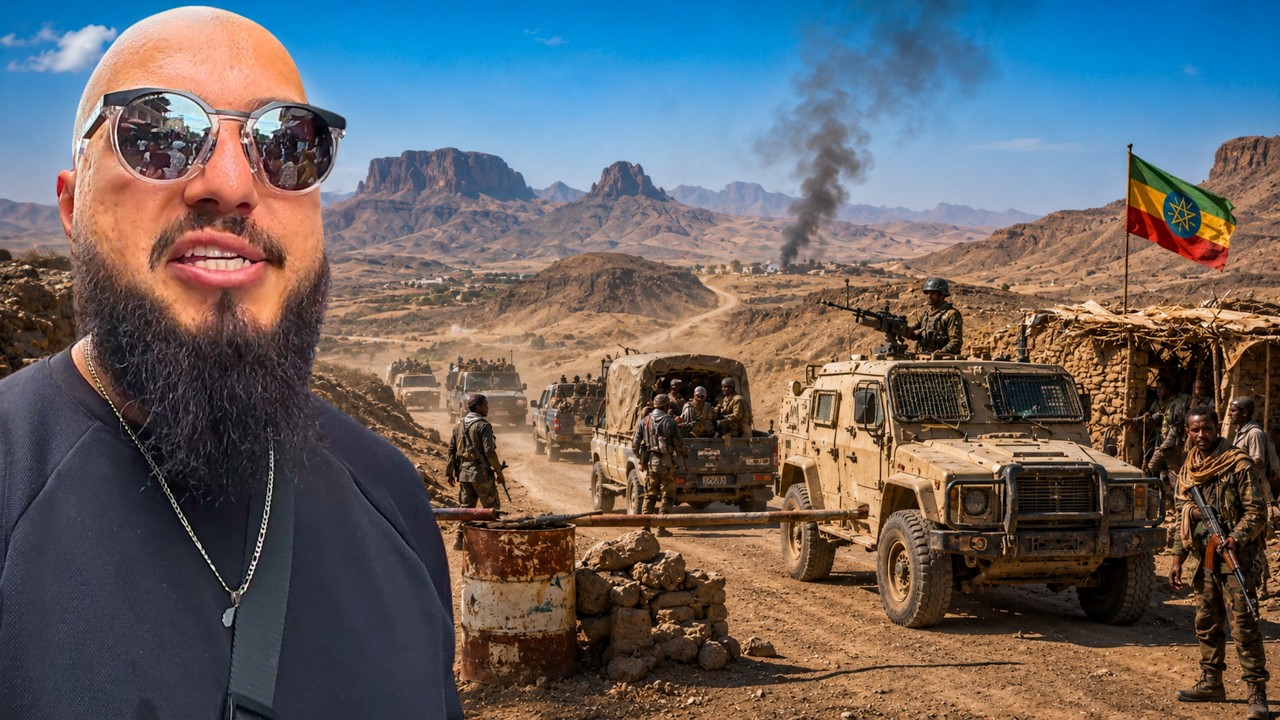
Afar is one of Ethiopia’s most striking and demanding regions, stretching across the northeast toward Eritrea and Djibouti within the Great Rift Valley. Much of it lies in the Afar (Danakil) Depression, one of the lowest and hottest inhabited places on Earth, shaped by shifting tectonic plates, active volcanoes, lava fields, and vast salt flats such as those around Lake Asale.
The Afar people, a Cushitic-speaking, predominantly Muslim pastoral community, have adapted to this harsh environment through mobile herding of camels, goats, and sheep, clan-based social organization, and rich oral traditions. Livestock and salt define much of the economy: for centuries, workers have carved salt blocks from the blinding white plains and transported them along caravan routes to the Ethiopian highlands, while more recent interests in mining and geothermal energy promise revenue but also raise questions about land rights and local benefits.
The region is also globally important for science; fossil discoveries in the Awash Valley, including the famous hominid skeleton “Lucy,” reveal that early human ancestors lived here millions of years ago. As a federal region, Afar faces complex governance challenges, from delivering services across a hot, sparsely populated desert to managing cross-border ties with communities in Eritrea and Djibouti.
Competition for scarce water and grazing, recurrent drought, and political tensions can fuel conflict, and some areas have at times been designated as a red zone by authorities or aid agencies, signaling heightened insecurity, road attacks, or nearby clashes that make travel dangerous. These red zone areas may restrict the movement of humanitarian workers, researchers, and tourists, even as local residents continue to navigate them with deep knowledge of the terrain and clan agreements.
Afar’s dramatic sites—Erta Ale volcano with its lava lake, the colorful hydrothermal field of Dallol, and the traditional salt caravans—have drawn adventurous visitors, but access has always depended on up-to-date security assessments, permits, and reliable local guides. Climate change and environmental stress heighten the region’s vulnerability: hotter temperatures, more frequent droughts, and land degradation strain pastoral livelihoods and can intensify disputes over resources.
At the same time, gradual social change is underway as some families settle near roads and towns to seek education, markets, and health care. To understand Afar is to see both its extremes and its resilience: a landscape of fire and salt, a cradle of human history, and a home where communities balance tradition and survival under constant environmental and security pressure, including the reality that some parts may be marked as a red zone at any given time.
________________________________________
Thank you so much for tuning in to every single video and joining me on adventures around the globe! Your support is the reason I do what I do with so much love and consistency. 🙏🏽
Here are all the ways you can support the channel and my work:
🛍️ Everyday Travel Wear by Davud | SHOP: https://www.akhundzadadavud.shop
✈ Holafly eSIM | 5% Discount: http://holafly.sjv.io/AP69BJ
🚑 Travel Medical Insurance by SafetyWing: https://shorturl.at/F18VU
🦍 Davud Expeditions: https://www.akhundzadadavud.com/
❤ Patreon Support: https://www.patreon.com/DavudAkhundzada