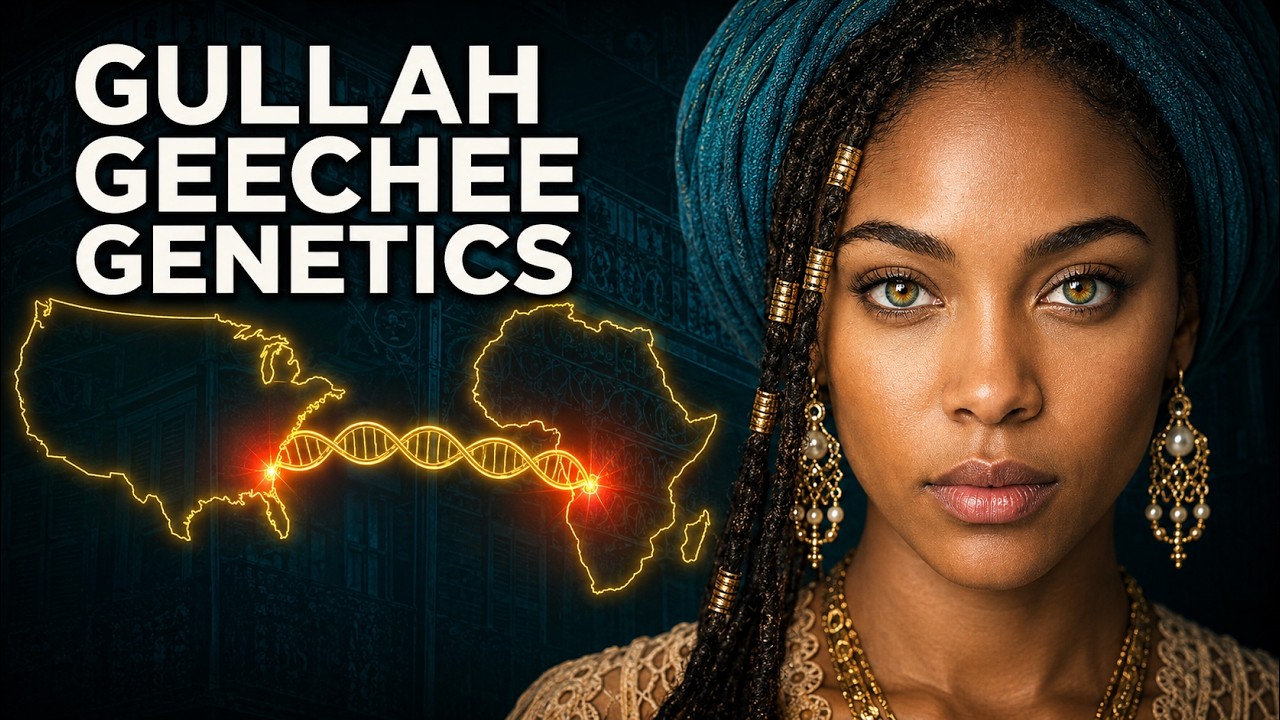
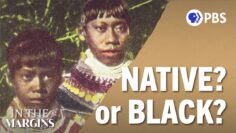
On the Sea Islands off the coast of South Carolina, Georgia, and northern Florida, a community of Black Americans has been speaking a language that no other population in the United States can fully understand — for over three hundred years. The Gullah Geechee didn’t just preserve African traditions. They preserved Africa itself. Their creole language is mutually intelligible with Krio, a language spoken today in Freetown, Sierra Leone — 4,500 miles and four centuries apart. Their sweetgrass baskets are identical in technique to baskets still woven in Senegambia. Their ring shout worship, their folk medicine, their cast net fishing, their one-pot rice dishes — none of it came from America. All of it came from the African Rice Coast. And DNA has now confirmed what the culture always said.
A 2021 whole-genome study of 331 Gullah individuals — the most comprehensive genetic analysis of the community ever conducted — found that the Gullah carry roughly 87 to 90% African ancestry. That’s significantly higher than the national African American average of 73 to 82%. European admixture was lower. Native American ancestry was minimal. The European contribution was overwhelmingly male-biased — concentrated on the paternal side — the molecular fingerprint of the sexual exploitation that defined plantation slavery. A genetic bottleneck roughly 13 generations ago — consistent with the peak of the slave trade to the Carolina lowcountry — was detected in the Gullah population, confirming a shared demographic history with other African Americans but with notably less post-enslavement gene flow from European populations. The isolation of the Sea Islands — surrounded by marshes, rivers, and tidal creeks — created a genetic and cultural barrier that kept the Gullah more connected to West Africa than almost any other Black population in the Americas.
But DNA also complicated the Sierra Leone origin story. While the Gullah showed slightly closer genetic relatedness to Sierra Leone populations than non-Gullah African Americans did, their ancestry was not exclusively Sierra Leonean. It was broadly West African — Senegambian, Sierra Leonean, Windward Coast, and Bight of Biafra lineages all contributed. Charleston’s port records confirm it: between 1700 and 1775, enslaved people arrived from across the entire West African coast, with the heaviest concentrations from Angola, Senegambia, and Sierra Leone. Plantation owners specifically sought Africans from the Rice Coast because they already knew how to cultivate rice in tidal floodplains — a skill no European possessed. The Gullah weren’t just enslaved for their labor. They were enslaved for their knowledge. And they kept that knowledge alive on islands that America forgot about for three centuries — preserving a language, a culture, and a genetic signature that connects directly to the other side of the Atlantic.
🔔 Subscribe for more stories where DNA rewrites everything.
📚 SOURCES:
• Zimmerman, K.D. et al. — “Genetic Landscape of Gullah African Americans,” American Journal of Physical Anthropology (2021)
• Parra, E.J. et al. — “Estimating African American Admixture Proportions by Use of Population-Specific Alleles,” American Journal of Human Genetics (1998)
• Opala, J.A. — “The Gullah: Rice, Slavery, and the Sierra Leone-American Connection,” Yale University (1987)
• Turner, L.D. — “Africanisms in the Gullah Dialect,” University of Chicago Press (1949)
• Pollitzer, W.S. — “The Gullah People and Their African Heritage,” University of Georgia Press (1999)
• South Carolina Encyclopedia — “Gullah” (2022)
• National Park Service — Gullah Geechee Cultural Heritage Corridor
• Slave Voyages Database — Charleston port importation records, Emory University