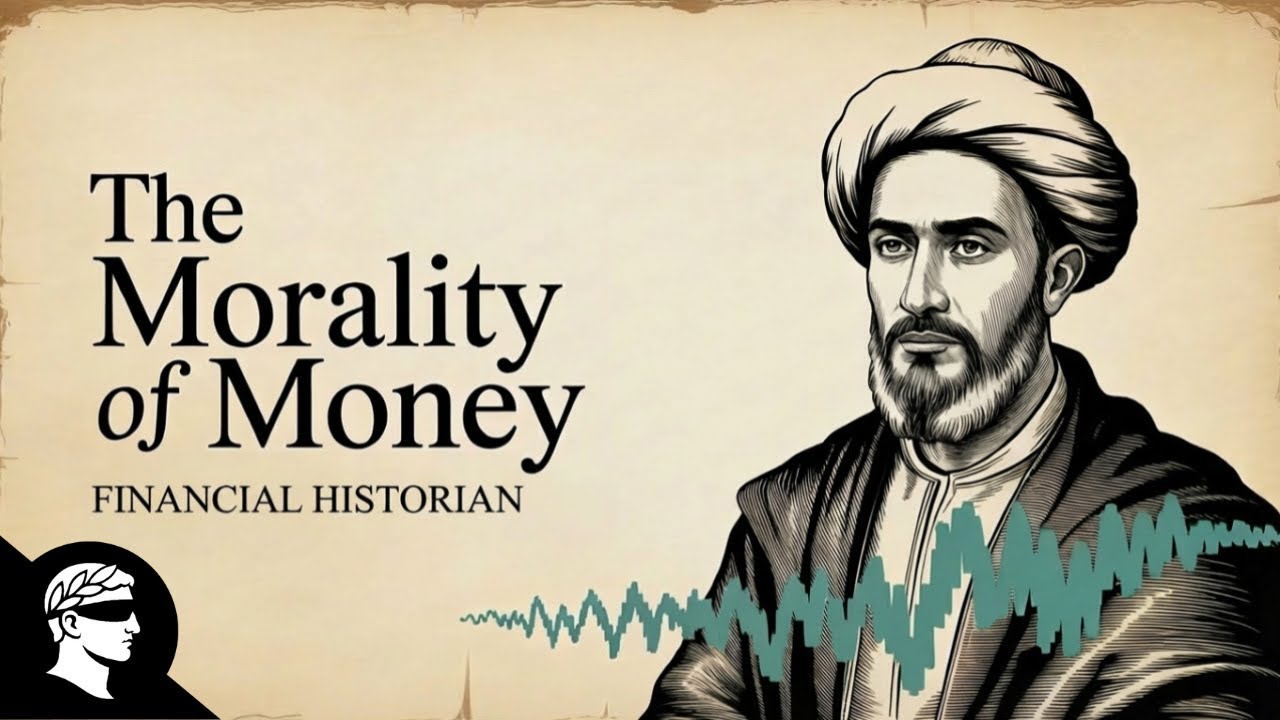
Abu Hamid Al-Ghazali lived during the height of the Islamic Golden Age, but his analysis of money, morality, and power feels like it was written for the 21st century. This video uncovers how a medieval scholar understood the psychology of wealth, the danger of corruption, and the economic consequences of losing integrity — long before modern economics existed. For anyone trying to understand today’s financial system, inflation, speculation, or inequality, Al-Ghazali’s ideas offer a shockingly relevant roadmap.
Key Facts & Insights
• Al-Ghazali argued that money is a tool, not the goal — its value comes from the trust behind it, not the metal itself.
• He described hoarded wealth as “dead money,” warning that idle capital destroys circulation and weakens societies.
• He condemned speculation and crisis profiteering centuries before modern debates on market manipulation.
• He identified trust as the foundation of all economic systems, anticipating today’s concepts of moral hazard and information asymmetry.
• He warned rulers that currency debasement is theft, predicting modern inflation crises with uncanny accuracy.
• His writings linked economic collapse to corruption, not scarcity — a lesson echoed in today’s global financial instability.
• Many of his insights predate Western economic theory by hundreds of years, making him one of history’s earliest analysts of money and power.
Further Reading
• The Alchemy of Happiness — Al-Ghazālī. A concise and accessible window into Al-Ghazālī’s worldview, exploring ethics, human behavior, and the moral relationship between wealth, intention, and society.
• Iḥyā’ ‘Ulūm al-Dīn (The Revival of the Religious Sciences) — Al-Ghazālī. Especially Books 3 and 4, where he analyzes fair trade, fraudulent practices, the morality of profit, and why economic life depends on ethical intention.
• Medieval Islamic Economic Thought — Abdul Azim Islahi. A clear, modern guide to Al-Ghazālī’s influence on market ethics, theories of value, and Islamic economic philosophy (I’d recommend this for our Western viewers).
If this gave you a new perspective, hit subscribe. History has the answers—and I’ll show you where to look.