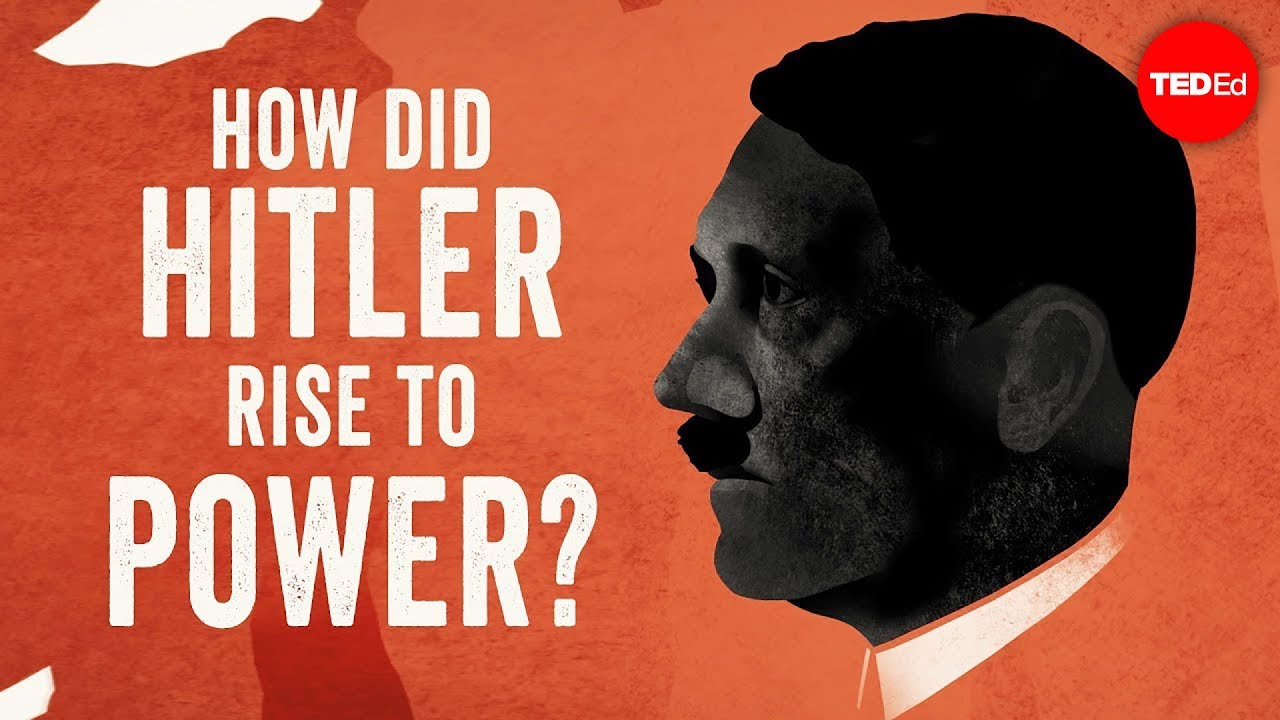
This TED-Ed lesson by Alex Gendler and Anthony Hazard examines the circumstances that enabled Adolf Hitler’s rise to power in Germany. Published in 2016, it provides a short introduction to the historical problem of how democratic institutions can be undermined and replaced by dictatorship.
Approach the lesson as historical inquiry
The question in the title calls for an explanation, not a single cause. As you watch, identify the political conditions, social pressures and decisions the educators describe. Keep the sequence of events clear: gaining influence, entering government and consolidating dictatorial authority are different stages that require separate examination.
The lesson addresses a regime responsible for genocide and persecution. Understanding its rise requires attention to antisemitism, propaganda and political violence, alongside institutions and the choices made by individuals. This article presents the film for critical historical education.
Questions for study
Which events does the lesson identify as turning points?
How does it distinguish electoral support from the wider process of obtaining power?
What roles do political leaders and institutions play in the explanation?
How can propaganda be studied without repeating its claims as fact?
What evidence would you seek to test a claim made in a short animated overview?
Build a timeline with sources
List the dates mentioned in the film, then add a source beside each event. Distinguish a contemporary document from a later historian’s interpretation. When comparing this history with another period, identify specific similarities and differences rather than relying on labels alone.
The official TED-Ed lesson page provides a starting point for further learning and credits the educators and animation team.
Film and image credit:TED-Ed; lesson by Alex Gendler and Anthony Hazard, animation by Uncle Ginger. Original rights remain with their respective holders.