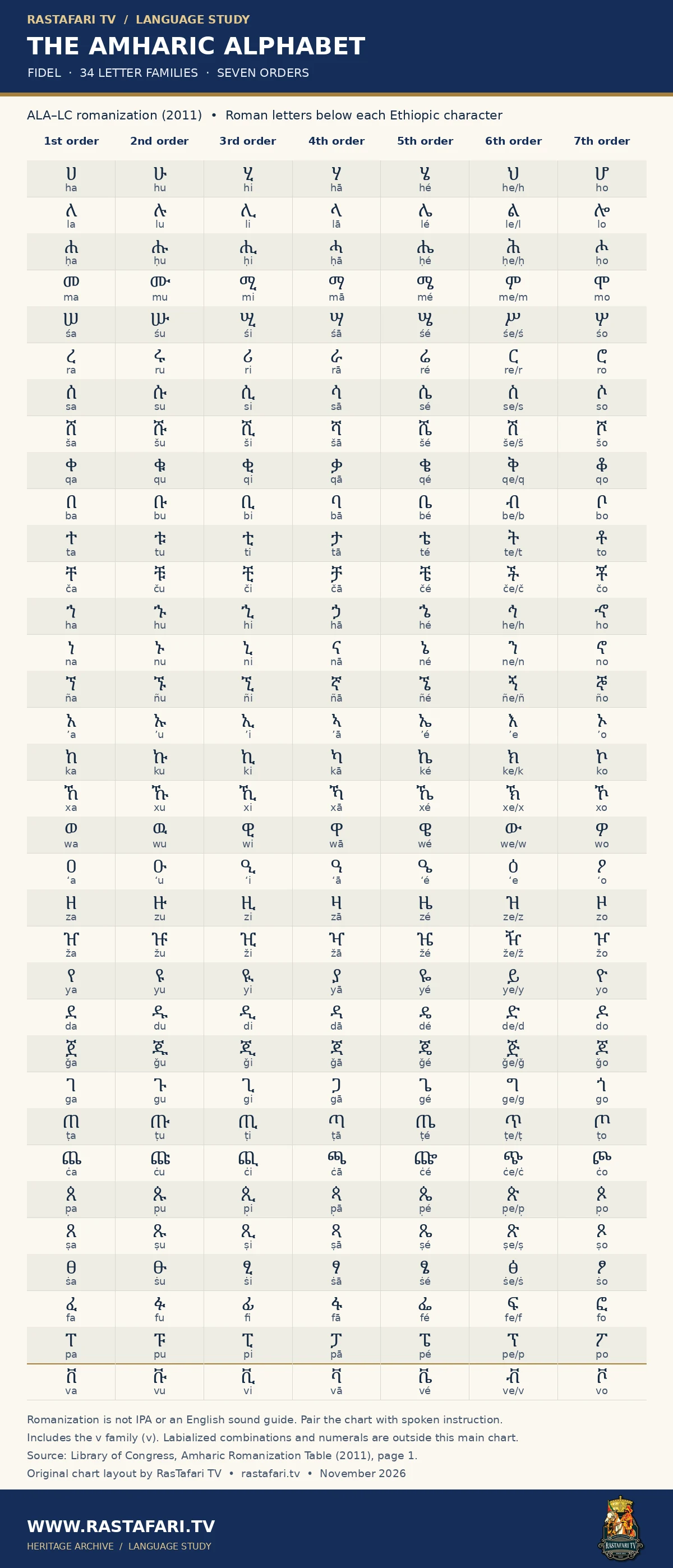
The Amharic alphabet is a starting point for exploring Ethiopian language and written culture. This study guide introduces Fidel, explains how to approach pronunciation resources, and offers a practical routine for learning to recognize and write the characters.
Understanding Amharic and Fidel
Amharic is a Semitic language spoken in Ethiopia and in diaspora communities. Its writing system uses Ethiopic script, developed from the tradition used to write Ge’ez. The script and the languages should not be confused: sharing a writing tradition does not make Amharic and Ge’ez the same language.
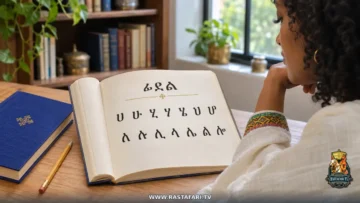
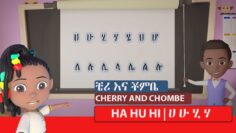
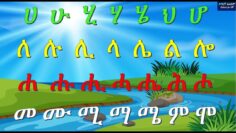
Fidel (ፊደል) is commonly used when referring to the letters or writing system. Rather than treating the chart as a list of English-style letters, notice the relationships between character forms. Ethiopic characters are traditionally organized in families of consonant–vowel combinations. Learning a family together can help you recognize the visual changes associated with its sounds.
For practice, pause after a short group, repeat it, and return to any forms you find difficult. A written transliteration is a reading aid; it should be used alongside a teacher’s pronunciation rather than treated as an exact match for English spelling. Captions were unavailable when this video was checked, so learners who need a text equivalent should use a written chart and seek a teacher-supported explanation.
Amharic alphabet chart: seven orders
This newly typeset chart follows the Library of Congress ALA–LC Amharic Romanization Table (2011), page 1. It presents 34 letter families, including the v family, across seven orders. Labialized combinations and numerals are outside this main chart; consult page 2 of the reference for those additional forms.
How to use the notation: The Latin letters follow ALA–LC romanization, a system for representing written characters. They are not International Phonetic Alphabet (IPA) symbols or English pronunciation spellings. Marks such as ā, é, and the dots or accents on consonants belong to that system. Sixth-order entries with a slash show the alternatives listed in the source. Use the spoken lesson and a qualified teacher for pronunciation.
Amharic Fidel in seven orders. Chart typeset by RasTafari TV from the Library of Congress ALA–LC reference (2011). Select the image to enlarge it.
Accessible text version of the chart
The same characters and romanization appear below as selectable text. On smaller screens, scroll the table horizontally. Screen-reader pronunciation of Ethiopic characters depends on the language voices installed on your device.
Amharic Fidel: 34 letter families and seven orders. Romanization follows the ALA–LC 2011 table.
Family
1st order
2nd order
3rd order
4th order
5th order
6th order
7th order
Family 1: ሀ
ሀ ha
ሁ hu
ሂ hi
ሃ hā
ሄ hé
ህ he/h
ሆ ho
Family 2: ለ
ለ la
ሉ lu
ሊ li
ላ lā
ሌ lé
ል le/l
ሎ lo
Family 3: ሐ
ሐ ḥa
ሑ ḥu
ሒ ḥi
ሓ ḥā
ሔ ḥé
ሕ ḥe/ḥ
ሖ ḥo
Family 4: መ
መ ma
ሙ mu
ሚ mi
ማ mā
ሜ mé
ም me/m
ሞ mo
Family 5: ሠ
ሠ śa
ሡ śu
ሢ śi
ሣ śā
ሤ śé
ሥ śe/ś
ሦ śo
Family 6: ረ
ረ ra
ሩ ru
ሪ ri
ራ rā
ሬ ré
ር re/r
ሮ ro
Family 7: ሰ
ሰ sa
ሱ su
ሲ si
ሳ sā
ሴ sé
ስ se/s
ሶ so
Family 8: ሸ
ሸ ša
ሹ šu
ሺ ši
ሻ šā
ሼ šé
ሽ še/š
ሾ šo
Family 9: ቀ
ቀ qa
ቁ qu
ቂ qi
ቃ qā
ቄ qé
ቅ qe/q
ቆ qo
Family 10: በ
በ ba
ቡ bu
ቢ bi
ባ bā
ቤ bé
ብ be/b
ቦ bo
Family 11: ተ
ተ ta
ቱ tu
ቲ ti
ታ tā
ቴ té
ት te/t
ቶ to
Family 12: ቸ
ቸ ča
ቹ ču
ቺ či
ቻ čā
ቼ čé
ች če/č
ቾ čo
Family 13: ኀ
ኀ ha
ኁ hu
ኂ hi
ኃ hā
ኄ hé
ኅ he/h
ኆ ho
Family 14: ነ
ነ na
ኑ nu
ኒ ni
ና nā
ኔ né
ን ne/n
ኖ no
Family 15: ኘ
ኘ ña
ኙ ñu
ኚ ñi
ኛ ñā
ኜ ñé
ኝ ñe/ñ
ኞ ño
Family 16: አ
አ ʼa
ኡ ʼu
ኢ ʼi
ኣ ʼā
ኤ ʼé
እ ʼe
ኦ ʼo
Family 17: ከ
ከ ka
ኩ ku
ኪ ki
ካ kā
ኬ ké
ክ ke/k
ኮ ko
Family 18: ኸ
ኸ xa
ኹ xu
ኺ xi
ኻ xā
ኼ xé
ኽ xe/x
ኾ xo
Family 19: ወ
ወ wa
ዉ wu
ዊ wi
ዋ wā
ዌ wé
ው we/w
ዎ wo
Family 20: ዐ
ዐ ʻa
ዑ ʻu
ዒ ʻi
ዓ ʻā
ዔ ʻé
ዕ ʻe
ዖ ʻo
Family 21: ዘ
ዘ za
ዙ zu
ዚ zi
ዛ zā
ዜ zé
ዝ ze/z
ዞ zo
Family 22: ዠ
ዠ ža
ዡ žu
ዢ ži
ዣ žā
ዤ žé
ዥ že/ž
ዦ žo
Family 23: የ
የ ya
ዩ yu
ዪ yi
ያ yā
ዬ yé
ይ ye/y
ዮ yo
Family 24: ደ
ደ da
ዱ du
ዲ di
ዳ dā
ዴ dé
ድ de/d
ዶ do
Family 25: ጀ
ጀ ǧa
ጁ ǧu
ጂ ǧi
ጃ ǧā
ጄ ǧé
ጅ ǧe/ǧ
ጆ ǧo
Family 26: ገ
ገ ga
ጉ gu
ጊ gi
ጋ gā
ጌ gé
ግ ge/g
ጎ go
Family 27: ጠ
ጠ ṭa
ጡ ṭu
ጢ ṭi
ጣ ṭā
ጤ ṭé
ጥ ṭe/ṭ
ጦ ṭo
Family 28: ጨ
ጨ ċa
ጩ ċu
ጪ ċi
ጫ ċā
ጬ ċé
ጭ ċe/ċ
ጮ ċo
Family 29: ጰ
ጰ p̣a
ጱ p̣u
ጲ p̣i
ጳ p̣ā
ጴ p̣é
ጵ p̣e/p̣
ጶ p̣o
Family 30: ጸ
ጸ ṣa
ጹ ṣu
ጺ ṣi
ጻ ṣā
ጼ ṣé
ጽ ṣe/ṣ
ጾ ṣo
Family 31: ፀ
ፀ ṡa
ፁ ṡu
ፂ ṡi
ፃ ṡā
ፄ ṡé
ፅ ṡe/ṡ
ፆ ṡo
Family 32: ፈ
ፈ fa
ፉ fu
ፊ fi
ፋ fā
ፌ fé
ፍ fe/f
ፎ fo
Family 33: ፐ
ፐ pa
ፑ pu
ፒ pi
ፓ pā
ፔ pé
ፕ pe/p
ፖ po
Family 34: ቨ
ቨ va
ቩ vu
ቪ vi
ቫ vā
ቬ vé
ቭ ve/v
ቮ vo
A simple study routine
Choose a small group. Begin with one character family rather than trying to memorize an entire chart in one sitting.
Listen and point. Follow the written forms while listening to the corresponding pronunciation. Replay a short section as needed.
Write and compare. Copy each form slowly, then compare your work with the source. Notice the details that distinguish similar shapes.
Recall without copying. Cover the model and try to write the forms again. Mark the ones you want to review.
Return to context. With a teacher or reliable course, connect the characters to familiar words and short phrases.
Keep a study notebook with the source, lesson title, date, and questions that arise. When two resources use different Latin spellings, record which romanization system each uses before deciding that one must be an error.