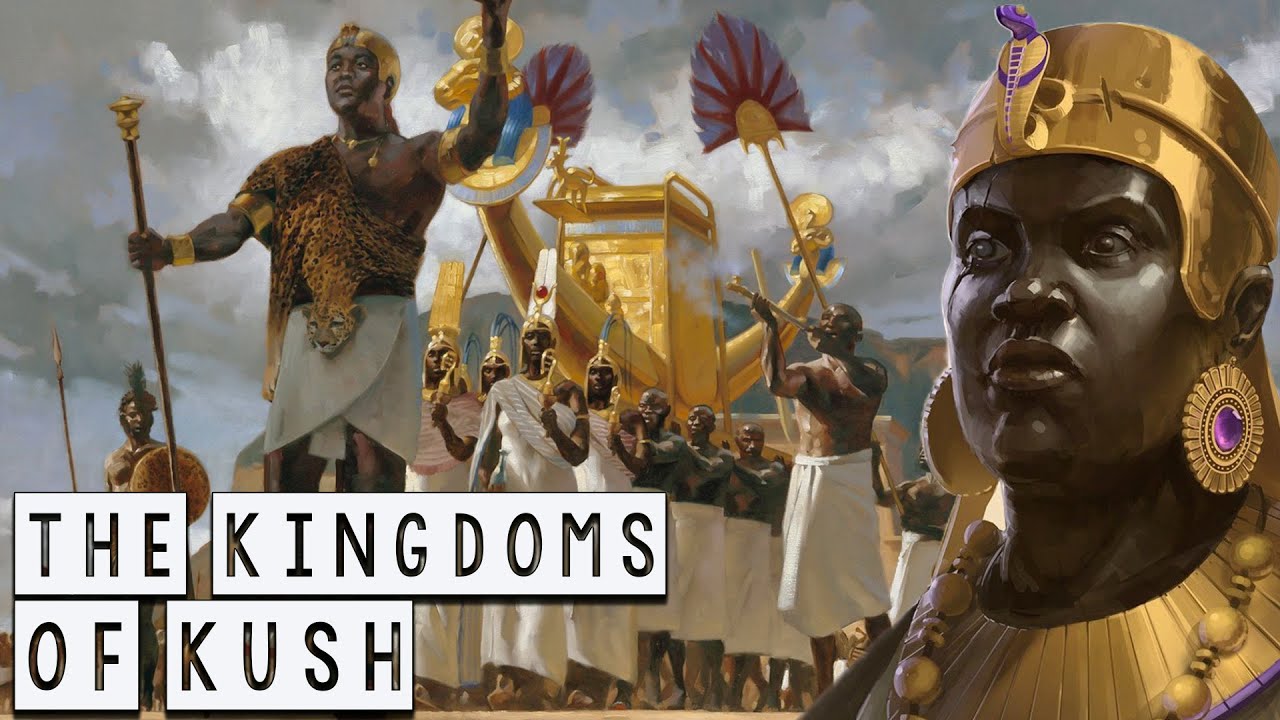
The Black Pharaohs: The Kingdoms of Kush, from See U in History / Mythology, introduces an important civilization of the Nile Valley. Watch the illustrated history video above, then use the archaeological resources and questions below to deepen your research.
Kush in its own historical setting
Kush should be studied as a civilization with its own institutions, communities and artistic traditions, as well as through its connections with Egypt. The UNESCO-listed Gebel Barkal and Sites of the Napatan Region include temples, palaces, pyramids and burial places associated with the Napatan and Meroitic cultures.
These remains provide evidence that can be examined alongside written accounts. A temple, royal inscription and burial site offer different kinds of information; none alone describes an entire society.
Reading visual reconstructions carefully
The video uses illustration to make the past accessible. Such images are modern interpretations, not photographs of ancient people. When a costume, building or scene appears, ask what archaeological evidence supports it and which details may be artistic choices.
Study questions
Which places and periods does the video identify?
How are Kush’s relationships with neighboring societies explained?
What do monuments reveal about political and religious authority?
Whose everyday experiences are less visible in royal monuments?
Which claims would benefit from an excavation report or museum catalogue?
Research activity
Select one of the sites in UNESCO’s listing: Gebel Barkal, Kurru, Nuri, Sanam or Zuma. Create a brief record of its location, surviving structures and historical significance. Keep observations about surviving evidence separate from reconstructions of how the site once looked.