

A Visit to Shashemane, Ethiopia’s Rastafarian Utopia
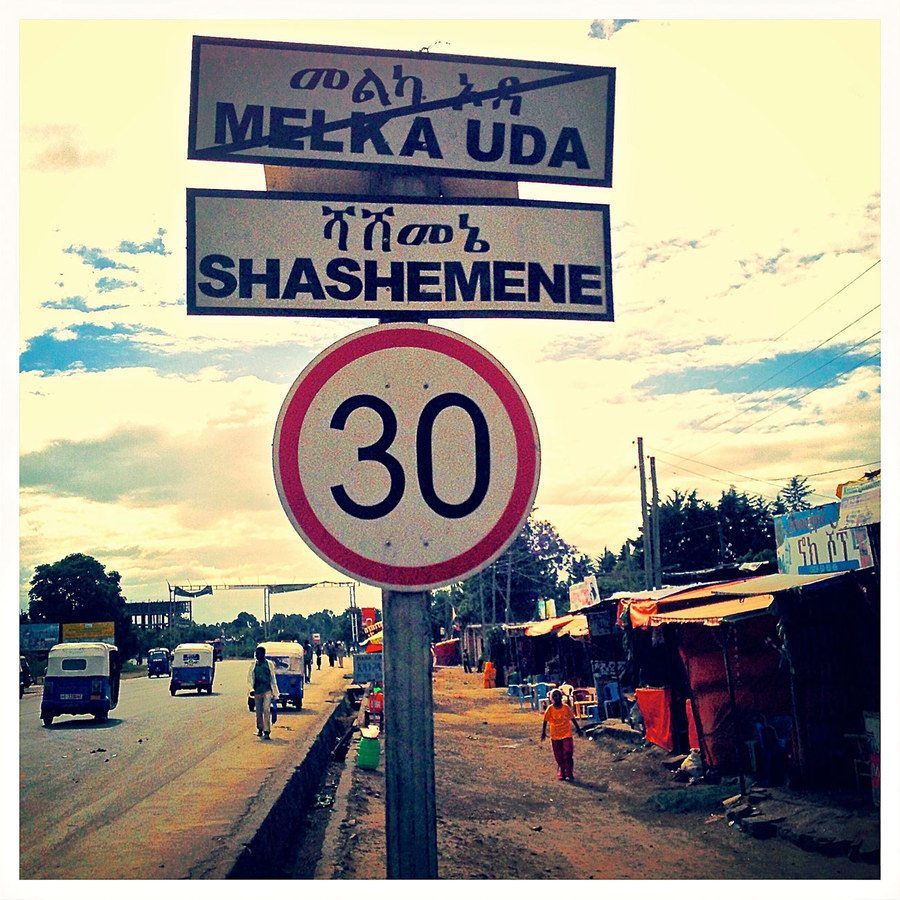
Drive 155 miles south from Addis Ababa, Ethiopia’s capital, and you’ll find yourself in a little patch of Jamaica, where dreadlocked Rasta settlers, many born in the Caribbean, have now made their home. Welcome to the community of Shashemane—Ethiopia’s version of “Amish country.”
You do not have to look far in Africa to see the influence of reggae music. Once I met a Tuareg tribesman in the Sahara Desert who proudly played me a Bob Marley ringtone on his cell phone. Reggae music swept ’round the world in the 1970s, then receded a bit in most places. It still lives large in Africa. There is great reverence for the Jamaican classics, but there are also many lively local scenes. Reggae is music for the dispossessed, and Africa itself plays a leading role in reggae’s narrative. In reggae mythology, Africa is the Promised Land, the destined homeland where the African diaspora will someday be repatriated. Africa—and Ethiopia in particular—is the “Land of Zion” sung about in so many reggae songs.
Reggae has its own code and language, infused largely with the ideology of the Rastafarians—followers of a spiritual system that arose in the 1930s in Jamaica. A big influence on the Rastafarians was Marcus Garvey, a Jamaican political leader in the 1920s who led a Back to Africa movement among descendants of slaves throughout the Americas. Rastafarians regard Garvey as a prophet who predicted that one day a black man would be crowned king in Africa and would bring deliverance to dark-skinned people everywhere.
“Follow, follow, follow, follow Marcus Garvey’s footsteps,” sang reggae singer Burning Spear. And where exactly was Garvey going? “We’re leaving Babylon, we’re going to our father’s land,” Bob Marley told us in “Exodus.” Not Babylon, Long Island, mind you, but the metaphorical one where, as Marley sang, “the system is the vampire”—the wicked place that embodies all of what’s wrong with Western culture. Babylon, as Steel Pulse said, “makes the rules . . . where my people suffer.”

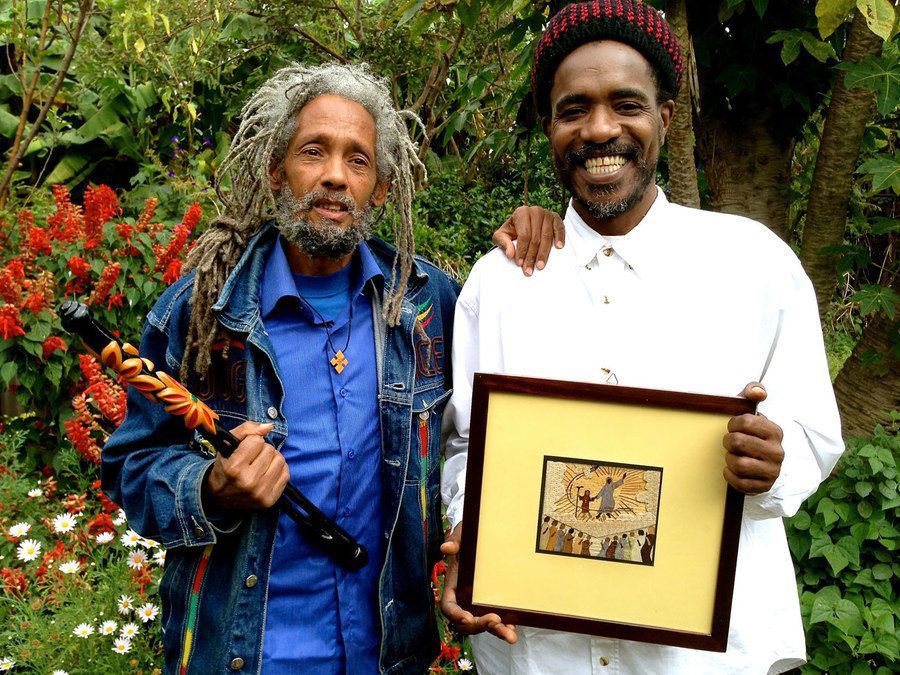
I had arranged to meet some of the community’s “elders” and also with a reggae musician, Sydney Salmon. “Like the fish,” he says,” but they call me Solomon here.” Born in Jamaica, he migrated to New York, studied music, played with many notable reggae artists, including Beres Hammond, became a Rasta, and then, in 2000, released a single, “Shashemane on My Mind.” It must indeed have been on his mind, because he soon packed up and moved here, marrying an Ethiopian woman, and forming the Imperial Majestic Band. He has become a bit of a star in Ethiopia. Thirteen years on, “a newcomer,” he does not see himself going back.

For all the difficulties, though, the Rastas who came and stayed seem happy with their choice. They have built a very tight-knit, peaceful, and spiritual community, albeit with a few rough touts trying to peddle ganja. Their land is rich, they live in natural beauty, and the people look healthy and satisfied. They have a school and even a Web site (shashamane.org). As for ganja, that Rastafarian staple, although it is illegal in Ethiopia, it seems to be quietly tolerated in Shashemane. One Rasta told me, “It’s a holy sacrament. We use ganja instead of wine, but we are not arrogant about it and do not want to provoke the system.”
For all the drum-beating and religious and musical encouragement—for all the exhortations about Marcus Garvey and Haile Selassie—the Back to Africa movement never really happened. If they are going anywhere, most descendants of African slaves are not “going home.” Even Bob Marley, the most famous Rastafarian of all, did not do it, though he visited Shashemane in 1978. (His wife, Rita, wanted to transfer his body to Ethiopia, his fatherland, but his grave remains in Jamaica.) More than a million people have emigrated to the United States from the Caribbean, in contrast to the few thousand that ever made it to Ethiopia. But the settlers of Shashemane seem to have few regrets. Desmond Martin, an old-timer Rastafarian who came in 1975 from Kingston, told me, “I escaped from Babylon. It was difficult, but I’m never going back.”
Source: Vanity Fair